

 Image 1 of 3
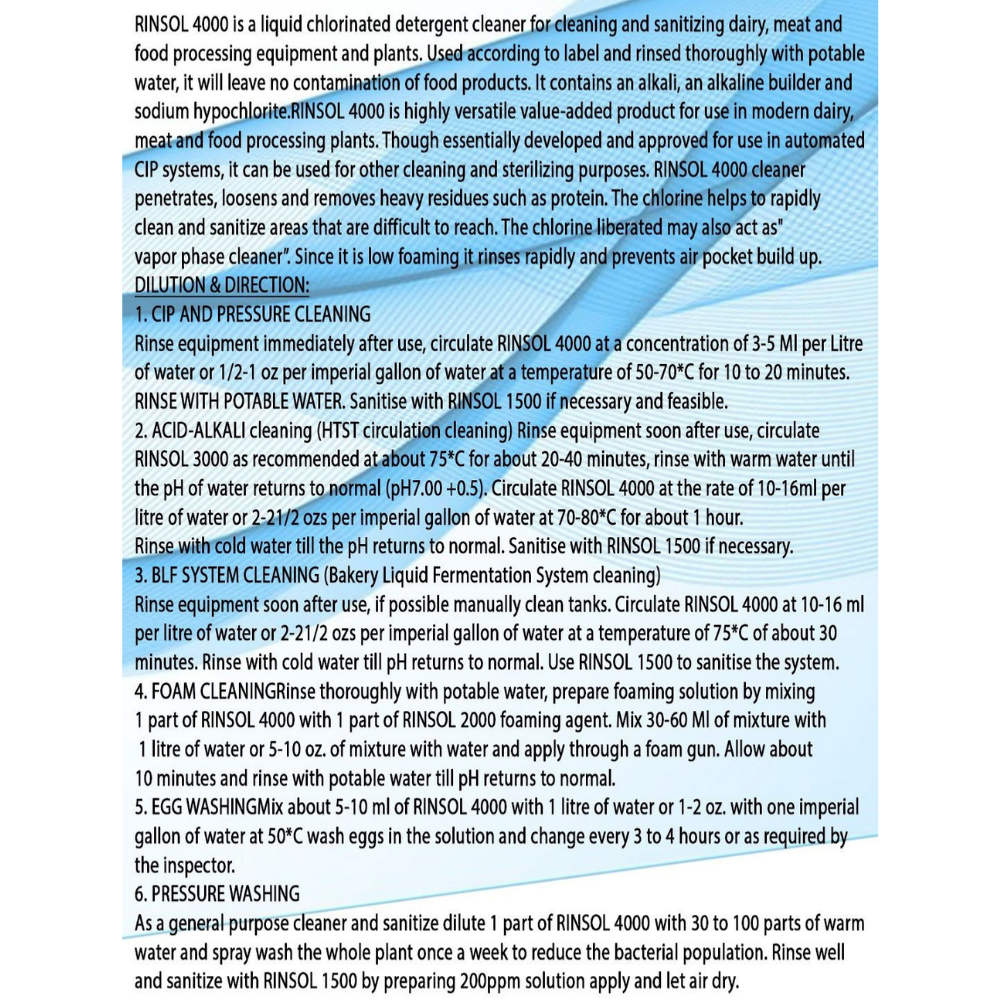 Image 2 of 3
 Image 3 of 3
A highly versatile liquid chlorinated detergent for use in modern dairy, meat, and food processing plants. Though essentially developed and approved for use in automated CIP systems, it can be used for other cleaning and sterilizing purposes. When used according to the label and rinsed thoroughly with potable water, it will leave no contamination of food products.
Darco CIP Cleaner penetrates, loosens, and removes heavy residues such as protein. The chlorine helps to rapidly clean and sanitize areas that are difficult to reach. The chlorine liberated may also act as “vapor phase cleaner”. Since it is low foaming, it rinses rapidly and prevents air pocket buildup.
It also may be used for bakery liquid fermentation cleaning systems. It is suitable for spray washing of egg shells and as a general purpose cleaner and sanitizer.
It contains an alkali, an alkaline builder, and sodium hypochlorite.
It is chlorinated, which removes proteins, blood, and other soils effectively
Low foaming - improves rinsing and prevents air pockets
Contains water softeners for hard water tolerance
Registered with Agriculture Canada, therefore no objection from Inspection personnel
CIP and Pressure Cleaning
Rinse equipment immediately after use
Circulate cleaner at a concentration of 3-5 ml per litre of water (½ to 1 oz per imperial gallon of water) at a temperature of 50 to 70 °C (122 to 158 °F) for 10 to 20 minutes
Rinse with potable water
Sanitize if necessary and feasible
Acid-Alkali Cleaning (HTST Circulation Cleaning)
Rinse equipment soon after use
Circulate cleaner as recommended at about 75 °C (41 °F) for about 20 to 40 minutes
Rinse with warm water until the pH of the water returns to normal (pH 7.00 +0.5)
Circulate at the rate of 10 to 16 ml per litre of water (2 to 2- ½ oz per imperial gallon of water) at 70 to 80 °C (158 to 176 °F) for about 1 hour
Rinse with cold water until the pH returns to normal
Sanitize if necessary
Bakery Liquid Fermentation (BLF) System Cleaning
Rinse equipment soon after use
If possible, manually clean tanks
Circulate at the rate of 10 to 16 ml per litre of water (2 to 2- ½ oz per imperial gallon of water) at a temperature of 75 °C (167 °F) for about 30 minutes
Rinse with cold water until pH returns to normal
Use sanitizer to sanitize the system
Foam cleaning
Rinse thoroughly with potable water
Prepare foaming solution by mixing 1 part of cleaner with 1 part of foaming agent
Mix 30 to 60 ml of mixture with 1 litre of water (5 to 10 oz of mixture with water)
Apply through a foam gun
Allow it to remain for about 10 minutes
Rinse with potable water until pH returns to normal
Egg Washing
Mix about 5 to 10 ml of cleaner with 1 litre of water (1 to 2 oz with 1 imperial gallon of water) at 50 °C (122 °F)
Wash eggs in the solution
Change every 3 to 4 hours, or as required by the inspector
Pressure Washing
As a general purpose cleaner and sanitizer:
Dilute 1 part of cleaner with 30 to 100 parts of warm water
Spray wash the whole plant once a week to reduce the bacterial population
Rinse well, and sanitize with sanitizer by preparing 200 ppm solution, applying it, and letting it air dry
A highly versatile liquid chlorinated detergent for use in modern dairy, meat, and food processing plants. Though essentially developed and approved for use in automated CIP systems, it can be used for other cleaning and sterilizing purposes. When used according to the label and rinsed thoroughly with potable water, it will leave no contamination of food products.
Darco CIP Cleaner penetrates, loosens, and removes heavy residues such as protein. The chlorine helps to rapidly clean and sanitize areas that are difficult to reach. The chlorine liberated may also act as “vapor phase cleaner”. Since it is low foaming, it rinses rapidly and prevents air pocket buildup.
It also may be used for bakery liquid fermentation cleaning systems. It is suitable for spray washing of egg shells and as a general purpose cleaner and sanitizer.
It contains an alkali, an alkaline builder, and sodium hypochlorite.
It is chlorinated, which removes proteins, blood, and other soils effectively
Low foaming - improves rinsing and prevents air pockets
Contains water softeners for hard water tolerance
Registered with Agriculture Canada, therefore no objection from Inspection personnel
CIP and Pressure Cleaning
Rinse equipment immediately after use
Circulate cleaner at a concentration of 3-5 ml per litre of water (½ to 1 oz per imperial gallon of water) at a temperature of 50 to 70 °C (122 to 158 °F) for 10 to 20 minutes
Rinse with potable water
Sanitize if necessary and feasible
Acid-Alkali Cleaning (HTST Circulation Cleaning)
Rinse equipment soon after use
Circulate cleaner as recommended at about 75 °C (41 °F) for about 20 to 40 minutes
Rinse with warm water until the pH of the water returns to normal (pH 7.00 +0.5)
Circulate at the rate of 10 to 16 ml per litre of water (2 to 2- ½ oz per imperial gallon of water) at 70 to 80 °C (158 to 176 °F) for about 1 hour
Rinse with cold water until the pH returns to normal
Sanitize if necessary
Bakery Liquid Fermentation (BLF) System Cleaning
Rinse equipment soon after use
If possible, manually clean tanks
Circulate at the rate of 10 to 16 ml per litre of water (2 to 2- ½ oz per imperial gallon of water) at a temperature of 75 °C (167 °F) for about 30 minutes
Rinse with cold water until pH returns to normal
Use sanitizer to sanitize the system
Foam cleaning
Rinse thoroughly with potable water
Prepare foaming solution by mixing 1 part of cleaner with 1 part of foaming agent
Mix 30 to 60 ml of mixture with 1 litre of water (5 to 10 oz of mixture with water)
Apply through a foam gun
Allow it to remain for about 10 minutes
Rinse with potable water until pH returns to normal
Egg Washing
Mix about 5 to 10 ml of cleaner with 1 litre of water (1 to 2 oz with 1 imperial gallon of water) at 50 °C (122 °F)
Wash eggs in the solution
Change every 3 to 4 hours, or as required by the inspector
Pressure Washing
As a general purpose cleaner and sanitizer:
Dilute 1 part of cleaner with 30 to 100 parts of warm water
Spray wash the whole plant once a week to reduce the bacterial population
Rinse well, and sanitize with sanitizer by preparing 200 ppm solution, applying it, and letting it air dry